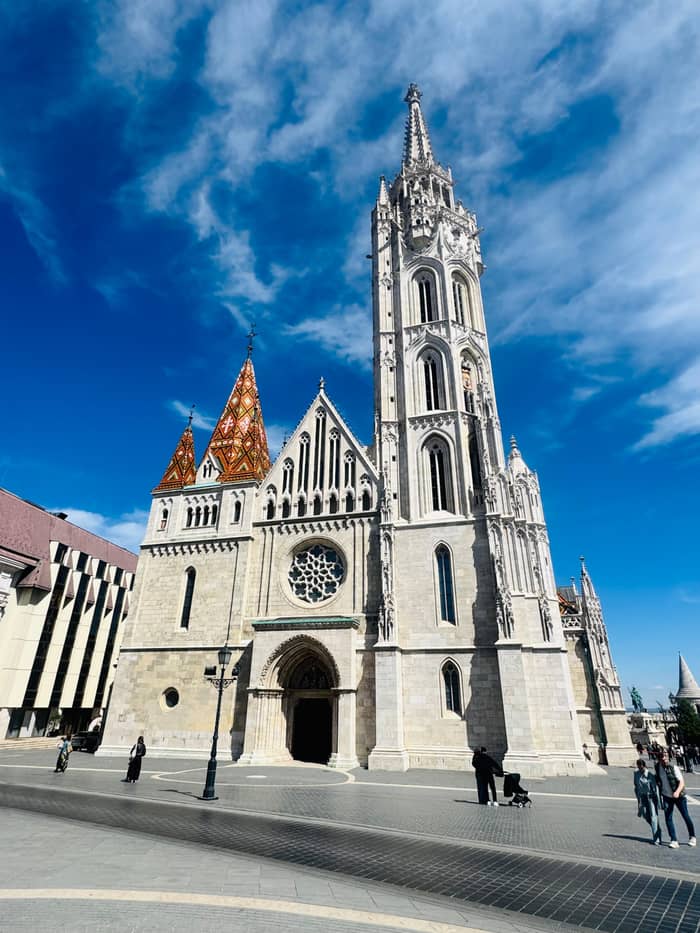
Small group
Parliament and Shoes walk
Basilica, Parliament, Shoes
- Length2 hours
- GroupUp to 10
- GuideEnglish
Guides
Language
Currency
Check open spots€12 and up · free cancelPick out your stop
Browse 30 stops
Pick a route and tap a pin or a stop: you get its note and a Google Maps link.
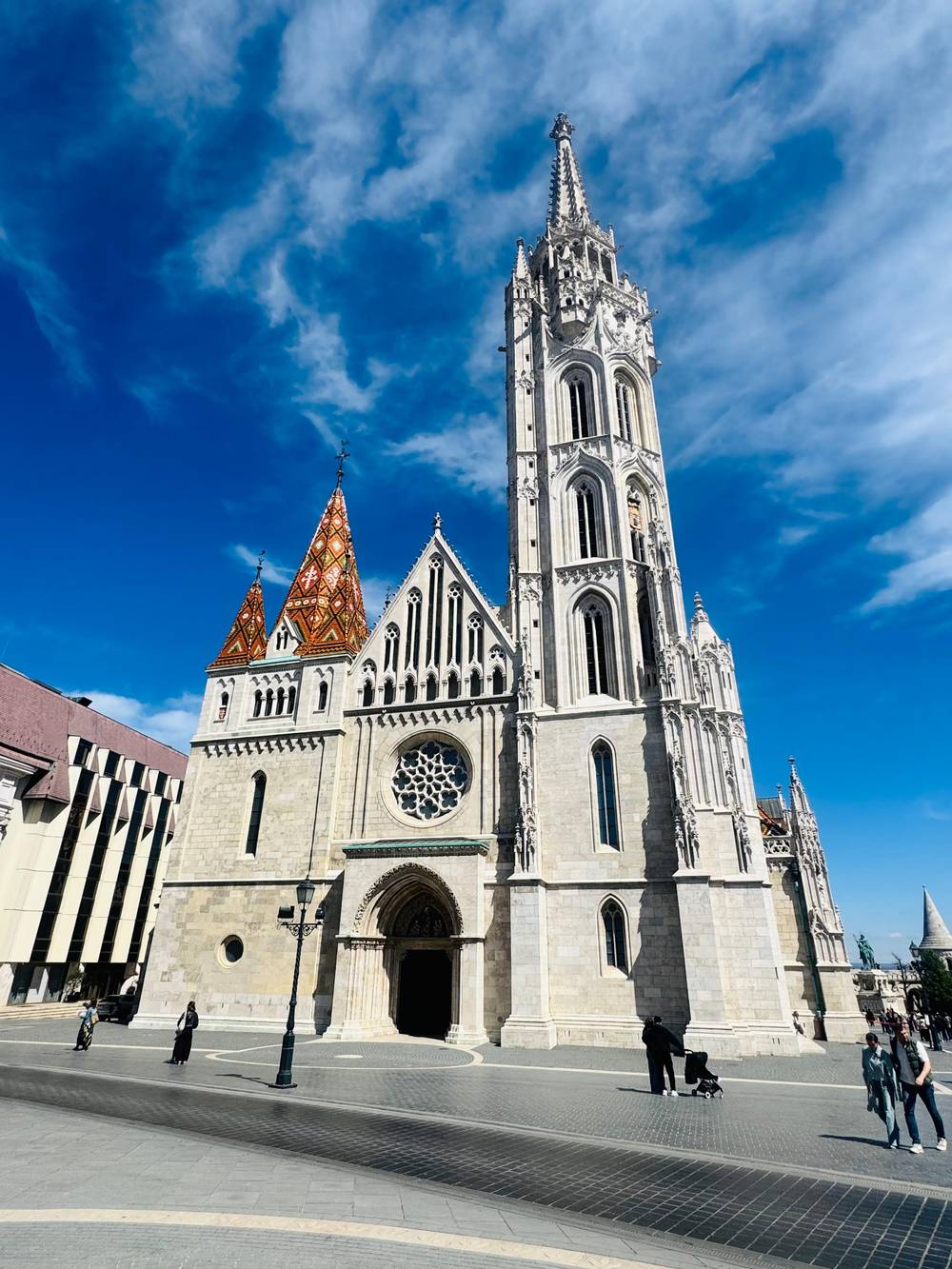
Budapest's largest church, 96 meters high; 364 steps or a lift to the dome.
Google MapsSquare in front of Parliament, framed by the old Ethnographic Museum and a ministry.
Google MapsHouse of Parliament, built 1885-1902; dome 96 metres.
Google MapsIron shoes remembering Jews shot into the Danube by the Arrow Cross.
Google MapsBuilt 1839-1849, blown up in 1945, reopened in 1949.
Google Maps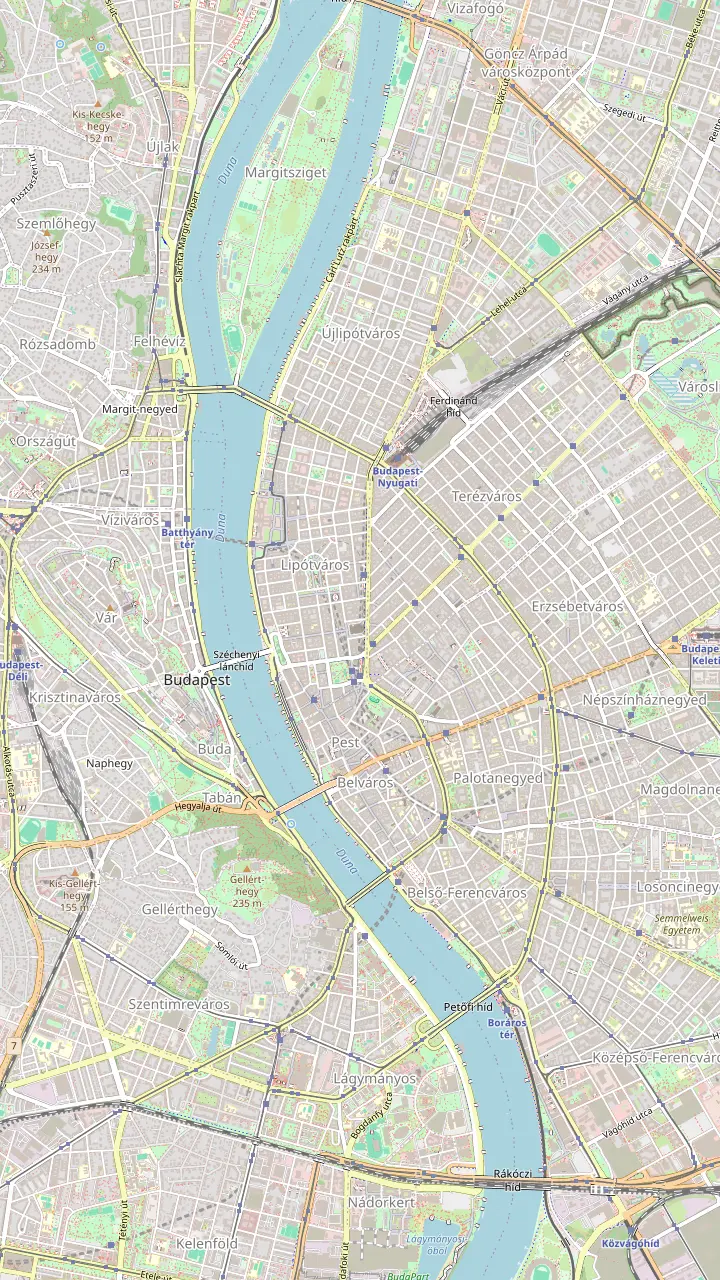
House of Terror at Andrássy út 60, closed on Mondays.
Google MapsUNESCO-listed square at the end of Andrássy út.
Google MapsWartime hospital and Cold War bunker, guided tours only, at Lovas út 4/c.
Google MapsFort on Gellért Hill; the Liberty Statue rises 40 metres with its pedestal.
Google MapsChurch in Gellért Hill whose entrance was walled up in the 1950s.
Google Maps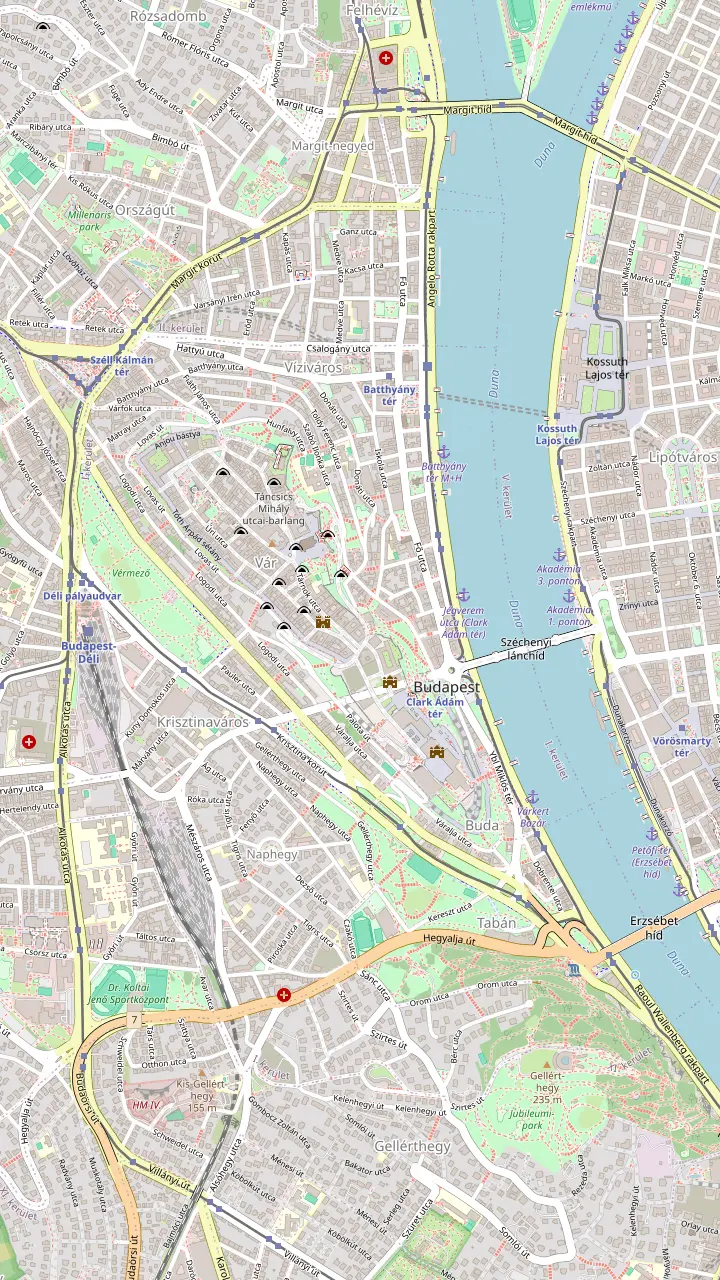
Meeting point for the long Buda Castle Cave tour, opposite Matthias Church.
Google MapsAdult church ticket 3,400 Ft; knees and shoulders covered.
Google MapsA 140 metre facade of terraces facing the Parliament.
Google MapsGate at the quiet northern end of the plateau, near the Medieval Jewish Prayer House.
Google MapsLone church tower at the north end of the hill; walk Táncsics Mihály utca to reach it.
Google MapsOfficial residence of the President of Hungary.
Google MapsRuns 08:00-22:00 between Clark Ádám tér and Szent György tér.
Google MapsAlajos Strobl's fountain of King Matthias, lit in colour after dark.
Google MapsThe largest public collection of Hungarian fine art, with a terrace over Pest.
Google MapsMiklós Ybl's riverside gardens, rebuilt between 2011 and 2014.
Google Maps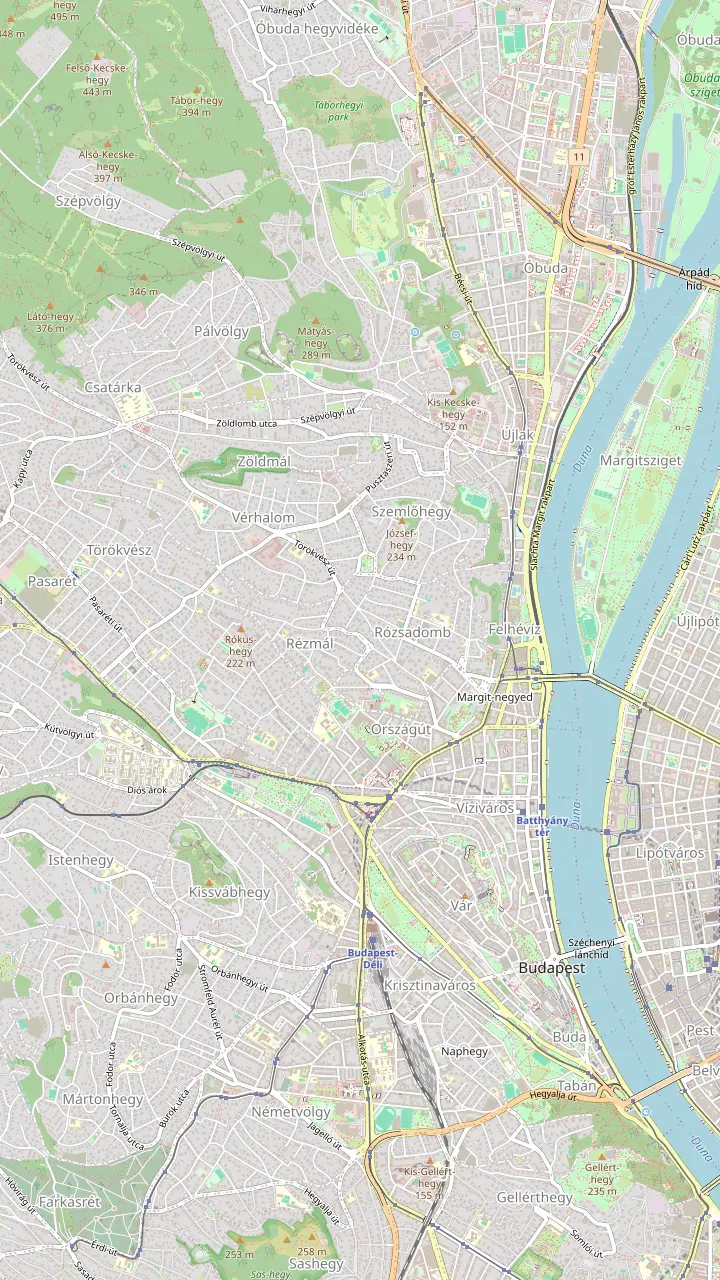
Short cave tour entrance at Dárda utca 2; tickets online only.
Google MapsWartime hospital and Cold War bunker, guided tours only, at Lovas út 4/c.
Google MapsSzemlő-hegyi, the step-free cave; closed on Tuesdays.
Google MapsPál-völgyi, the longest cave in Hungary; closed on Mondays.
Google Maps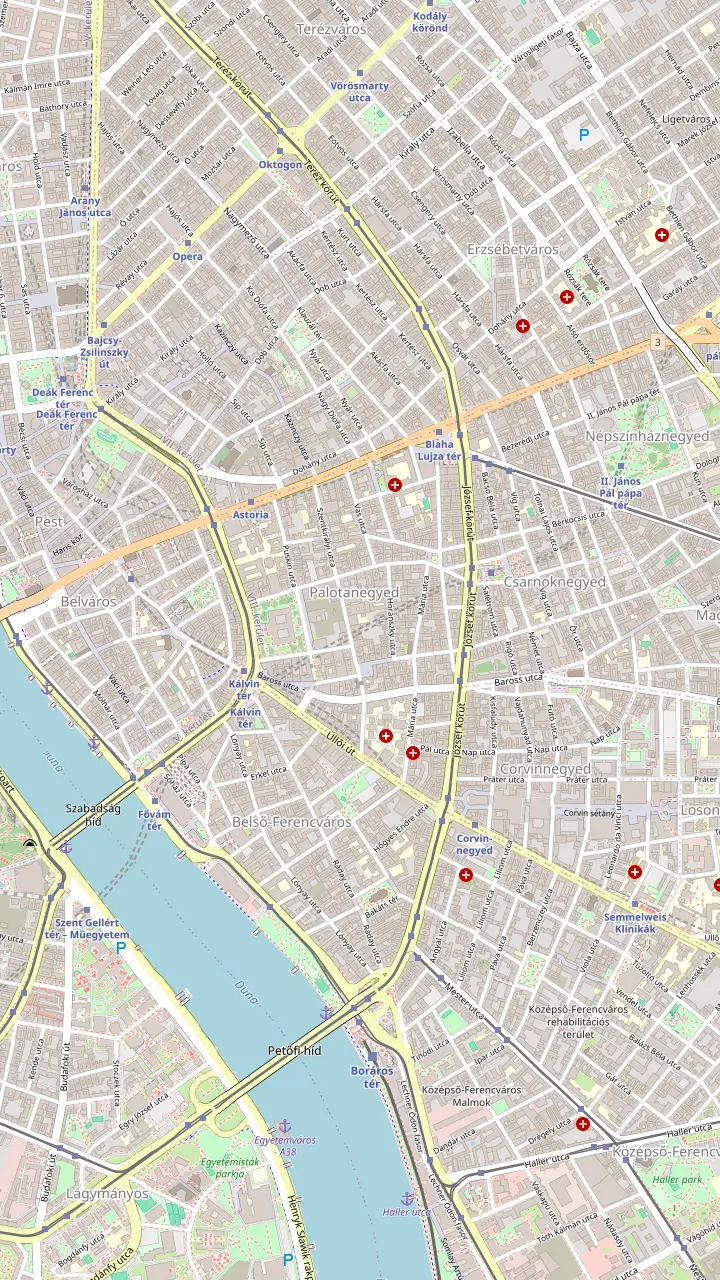
Otto Wagner's synagogue, reopened in 2021 with a kosher café.
Google MapsConsecrated on 6 September 1859; closed every Saturday.
Google MapsThe steel weeping willow by Imre Varga, behind the Heroes' Temple.
Google MapsHolocaust Memorial Center on Páva Street, open Tuesday to Sunday.
Google Maps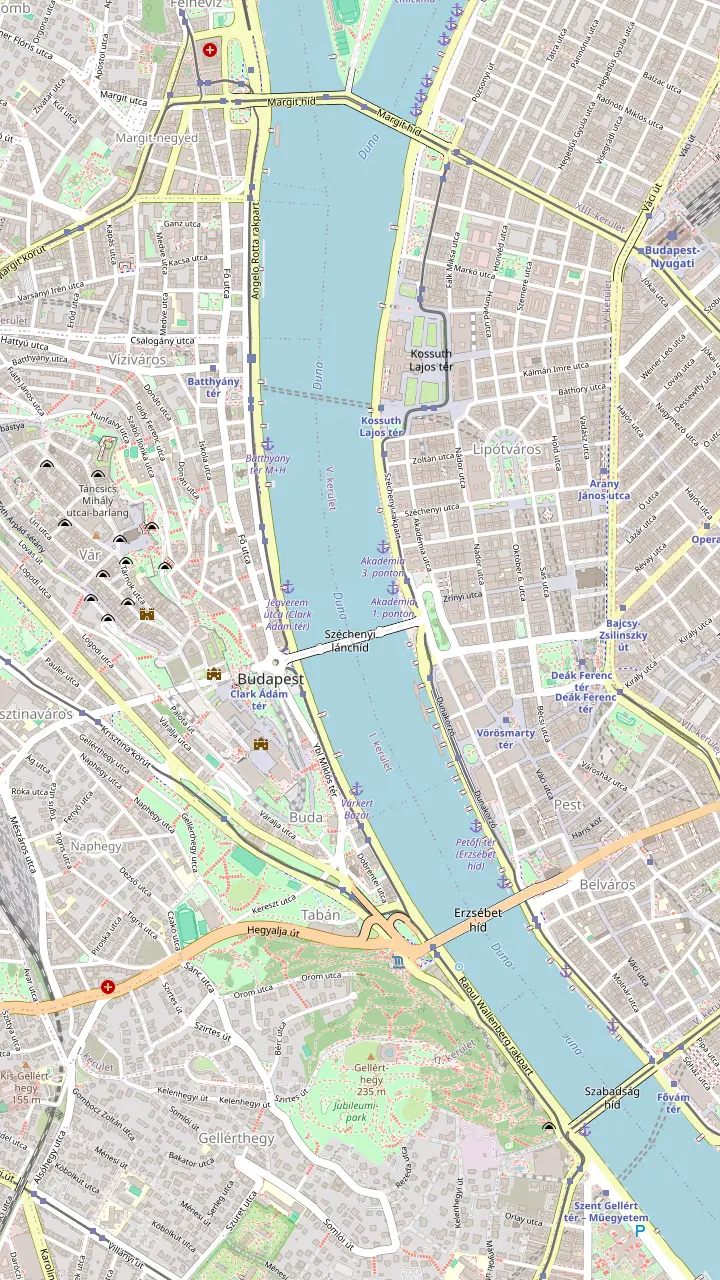
Starting square of the self-guided loop, in the heart of Pest.
Google MapsBudapest's largest church, 96 meters high; 364 steps or a lift to the dome.
Google MapsHouse of Parliament, built 1885-1902; dome 96 metres.
Google MapsIron shoes remembering Jews shot into the Danube by the Arrow Cross.
Google MapsBuilt 1839-1849, blown up in 1945, reopened in 1949.
Google MapsSquare at the foot of Castle Hill with the funicular's lower station.
Google MapsRuns 08:00-22:00 between Clark Ádám tér and Szent György tér.
Google MapsAdult church ticket 3,400 Ft; knees and shoulders covered.
Google MapsA 140 metre facade of terraces facing the Parliament.
Google MapsThe largest public collection of Hungarian fine art, with a terrace over Pest.
Google MapsMiklós Ybl's riverside gardens, rebuilt between 2011 and 2014.
Google MapsBridge back to Pest, seen in a row with the Chain and Liberty bridges from the quay.
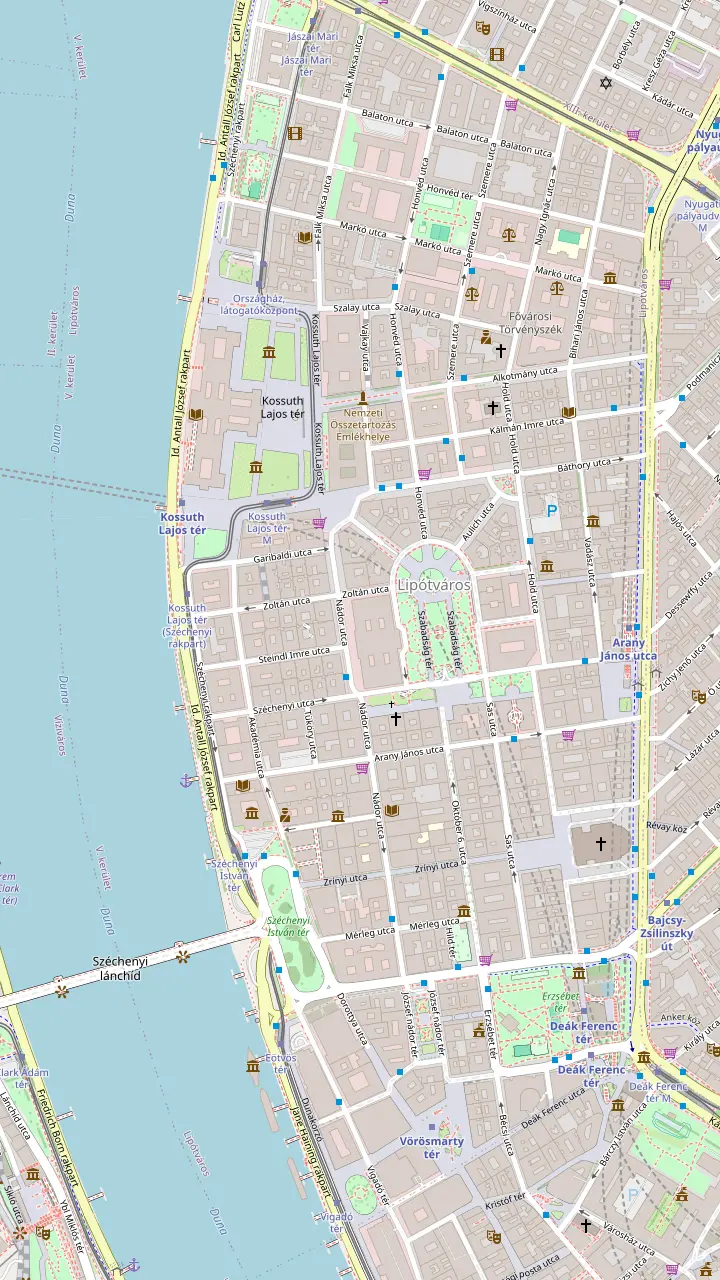
Google MapsMaps © OpenStreetMap contributors
The shoes along the Danube in Budapest remember people murdered on this riverbank. Here is what happened, who created the memorial, how to reach it on foot and how to visit with care.
Editorial team, budapestwalkingtour.click · Updated November 8, 2026 · Allow 8 min
Overview
The shoes along the Danube in Budapest are 60 pairs of cast iron shoes set on the stone edge of the Pest embankment, a short walk south of the Parliament.1 They look as if their owners had just left them behind. The tourism agency counts the memorial among the best known Holocaust memorials in Hungary.6
The shoes line the Pest quay in the stretch that runs up from the Chain Bridge toward Margaret Bridge, looking across to the Buda hills.4 There is no gate, ticket or opening time: the shoes sit on the open quay, by the water, where anyone walking the bank can stop. That openness is part of its power. Traffic runs behind you on the embankment road, the river moves in front, and the shoes stand in between, small and still.
Look closely before you take a photograph. Among the men's shoes are women's shoes and children's shoes, because women and children were murdered here too.7 Some are worn and buckled, some are delicate, some are tiny. The memorial asks you to picture real people standing at this edge, not a symbol. This page explains what happened here, who made the memorial and how to visit in a way that honours the people it remembers.
Holocaust memorials on foot
| Memorial | Where | What you see | Entry |
|---|---|---|---|
| Shoes on the Danube Bank | Pest embankment | Iron shoes, plaques | Open quay |
| Dohány synagogue garden | Dohány Street | Graves, wall section | With synagogue ticket |
| Emmanuel Memorial Tree | Wallenberg park | Steel willow with names | With synagogue ticket |
| Holocaust Memorial Center | Páva Street | Wall of names | Courtyard free |
| Stumbling stones | Across the city | Names of the deported | Free |
Locations and access as the tourism agency, the synagogue and the Holocaust Memorial Center describe them.4,19,20,21,22,23
Hungary's Jews had been stripped of their rights for years before the killings on the river. The Holocaust Memorial Center explains that from 1938 the state gradually took from a group of its own citizens their rights, property, freedom, dignity and finally their lives.8 The process turned murderous in 1944, after the German occupation.9 Its victims were Jews, or those the law classed as Jews, and the Roma.12
As the war neared its end, Hungary's Arrow Cross Party took control of the country.13 Thousands of Jewish civilians were deported to concentration camps or killed.14 Arrow Cross militiamen often lined Jews up on the banks of the Danube and shot them, so that the bodies fell into the river.3 By the autumn of 1944 the majority of Budapest's Jews were confined behind ghetto walls, cut off from the rest of the city.10
The shoes record a final cruelty. Shoes were valuable in wartime, so the victims were ordered to take them off and leave them on the bank, where the execution squads could collect and sell them.15 The Arrow Cross ran its terror from a building on Andrássy út 60, which later became the headquarters of the communist political police and is now the House of Terror museum.16
The memorial is the joint work of film director Can Togay and the architect Gyula Pauer, a winner of the Kossuth Prize.5 Their idea was simple and devastating: no figures, no names, only ordinary period footwear cast in iron and fixed to the stone where people were murdered. The result reads instantly in any language. It was erected on 16 April 2005, and in 2016 a public vote ranked it second among the world's public sculptures.2,11
At three points along the site, an inscription in Hungarian, English and Hebrew carries the dedication.25 The text remembers the victims shot into the Danube by Arrow Cross militiamen in 1944-45.2 Read it before you look at the shoes again. Then walk the length of the line slowly, from one end to the other, and notice how the styles and sizes change as you go, from heavy work boots to small children's shoes.
People sometimes search for the Shoes on the Danube Bank in Budapest expecting a museum. It is not one. It is an open-air memorial on the quay with inscriptions in three languages, so what you bring with you matters. Reading this page, or joining a guide who can tell individual stories, turns a striking sculpture into a memorial you understand. The Jewish Quarter guide on this site covers the ghetto and the synagogues nearby.
Plan your visit
Your time and how much context you want decide it.
If I have half an hour
Walk the embankment to the shoes
They stand on the open quay, south of the Parliament.4
If I want the history told well
Join a guided walk
A 2-hour walk includes the shoes and the Parliament.
If I also want to go inside Parliament
Book an entry ticket
The audio-guided visit inside lasts 1 hour.
If I want to understand the Holocaust
Add the Memorial Center
Its exhibition has run since February 21, 2006.24
If I am travelling with children
Prepare them beforehand
Women's and children's shoes stand among the men's.7
Walks that include the memorial
Small group
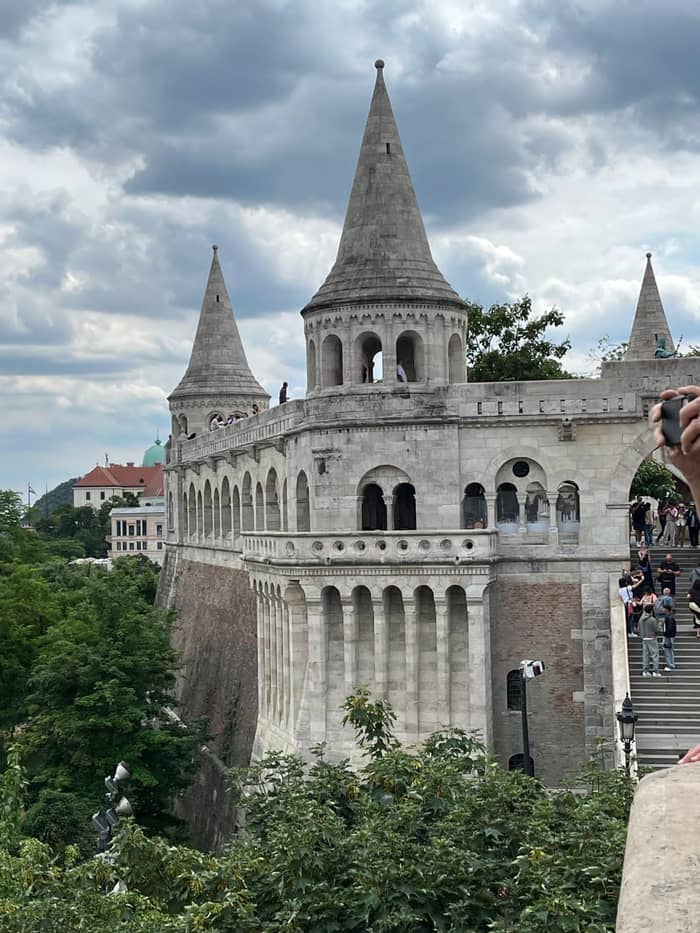
Basilica, Parliament, Shoes
English or Spanish
Basilica to Parliament
Indoor visit
Audio-guided visit inside
The easiest approach is along the river. The tourism agency describes the lower embankment in Pest as a flat, asphalt route by the water that runs south from the Parliament, so you can join it there and walk toward the bridges.70 From the south, walk north from the Chain Bridge along the Pest bank with the river on your left until you reach the line of shoes, before the Parliament's long facade.4
Setting out from central Pest, start at St Stephen's Basilica, walk on to the Chain Bridge, Gresham Palace and the Academy of Sciences, then turn north along the quay. That is the route of a guided walk sold on the booking site, which names the basilica, the Chain Bridge, Gresham Palace, the Academy of Sciences, the shoes and the Parliament as its stops. Every one of these places has a pin on the map, so you can plot the walk before you leave.
Mind the water. The memorial stands right at the river's edge, so take care in wet or icy weather and keep children close to you. Daylight is best for seeing the details, while dusk brings the Buda side into view behind the shoes. Either way, allow time to stand still rather than rushing past on the way to the Parliament.
Price a guided visit
Set your group size and compare walks and the Parliament ticket.
3 options compared
Set your group size and compare walks and the Parliament ticket.
≈
View≈
View≈
ViewStarting prices as on the booking platform, converted at the ECB reference rate. You see the exact price at booking.
Remembering
1938
The state begins stripping Jews of their rights.8
1944
Persecution turns murderous after the German occupation.9
Autumn 1944
Most of the city's Jews are walled into a ghetto.10
1944-45
16 April 2005
The iron shoes are fixed to the riverbank.2
2016
A public vote ranks it second among public sculptures worldwide.11
The tourism agency invites visitors to pay their respects to the innocent people shot by the Danube, and that is the right frame for a visit.71 This is a place of mourning on an open street. Speak quietly, keep groups compact so others can pass, and give space to anyone who is praying, reading the inscription or simply standing still with their thoughts. Wait for a gap rather than walking through someone's moment of reflection.
The memorial stands on an open public quay and many visitors photograph it, but think about how you take your pictures. Avoid posing, smiling selfies or stepping into the shoes, and do not sit on the edge among them. A respectful picture shows the shoes, the river and the city beyond. If you are with children, explain what the shoes mean before you arrive, in words that suit their age, so that they understand why everyone is quiet.
If you wish to leave something, a flower or a small stone is a common token. Place it gently at the edge, and do not move or tidy what others have left before you. The memorial belongs to everyone who comes here to remember, including descendants of the people who died on this bank. Leave it as you found it and carry its story with you to the next stop, whether that is the Parliament, the Jewish Quarter or a quiet bench by the river.
Video
Maria and Bryan Travel on YouTube · Tap play to load the video; not before.
This expressive work between the Chain Bridge and Margaret Bridge is a monument to the innocent people sent to their death merely for their origin
Before you go
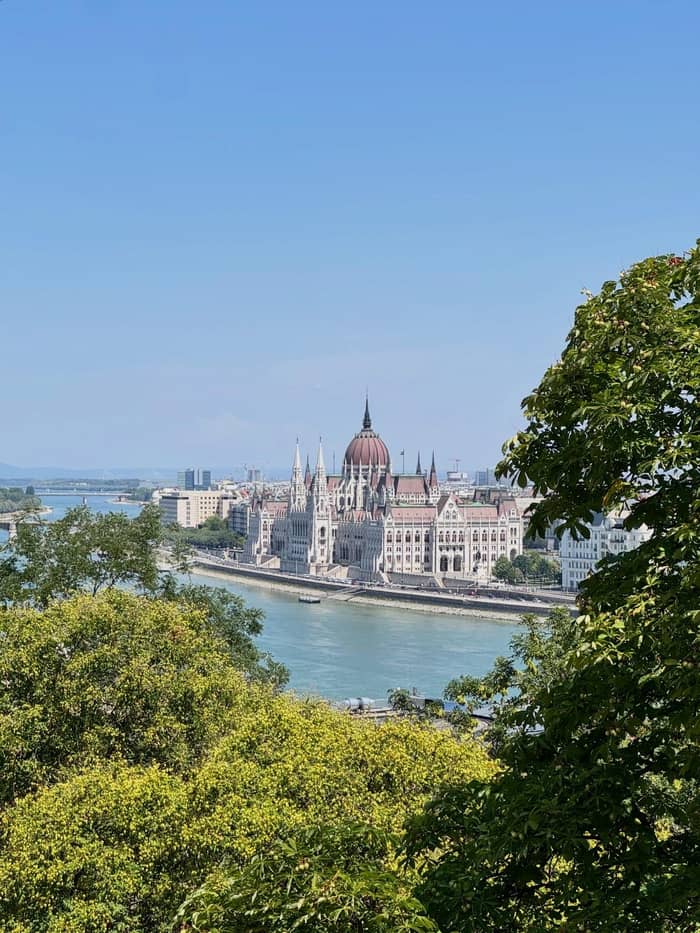
Walk a little north and the Hungarian Parliament fills the skyline. Building it took 17 years, from 1885 to 1902, to designs by Imre Steindl, who died weeks before it was inaugurated.57,72 Since 1987 it has been protected by UNESCO along with the river banks around it.73 The Danube wing is 268 metres long, the building is 123 metres at its widest, and the dome tower stands 96 metres high.17,18 From the memorial you see the whole river front at once.
Numbers are built into its design. The main staircase has 96 steps, matching the dome's height and pointing to the year 896, when the Hungarian conquest is dated.74 There are 365 towers, one for each day of the year.75 Around 700,000 people tour it every year, on a guided visit of about 50 minutes.76,77 Since 2000 the Holy Crown has been kept in its Dome Hall, guarded around the clock, and the guided route passes through that hall.78
The design competition for the Parliament produced the buildings facing it too: the former Ethnographic Museum and the Ministry of Agriculture line Kossuth Square.58 Book your Parliament visit before you come rather than queueing on the day. An entry ticket with an audio guide lasts 1 hour and is listed from €45. Pairing it with the memorial makes a thoughtful half day on the riverbank.
A Jewish history walking tour in Budapest usually links the riverbank with the old Jewish Quarter in District VII. There, the Dohány Street Synagogue garden holds the graves of nearly 2600 people who died during the Holocaust.19 Its memorial park, named for the Swedish diplomat Raoul Wallenberg, holds a weeping willow sculpture whose steel leaves carry names.79,21 Walking from the river to the quarter takes you through the heart of Pest and past several of these places.
For context, the permanent exhibition at the Páva Street memorial centre has told the story since February 21, 2006.24 Outside, a group of pillars recalls 600,000 Hungarian victims of the Holocaust and 6 million in Europe.80 Across the city, small stumbling stones set into the street remember victims at the buildings they were taken from.23 Look down as you walk and you will find them, often outside ordinary apartment houses where families once lived.
The walk booked from this page is a 2-hour free walking tour in English that includes the Shoes on the Danube Bank, the Parliament and St Stephen's Basilica, in groups of up to 10. It is listed from €3. A 2-hour heritage walk through the synagogue quarter, with synagogue entry, is listed from €56. Either way, a guide adds names, faces and family stories that the riverbank alone cannot give you, and you can ask the questions that a memorial raises.
FAQ
The shoes stand on the open riverbank, and the plaques are in Hungarian, English and Hebrew.25
The Arrow Cross Party took power in Hungary toward the end of the Second World War.13
The guided tour inside the Parliament next door takes roughly 50 minutes.77
Sources
Walking Budapest soon? Ask a real person here.