Interior visit
Heritage memorial walk
Synagogue and Jewish Museum
- Length2 hours
- GroupUp to 23
- MeetsDohány Street Synagogue
Guides
Language
Currency
Check open spots€12 and up · free cancelPick out your stop
Budapest Jewish Heritage Memorial Walking Tour & Synagogue Entry
★ 4.8 · 640 reviews so far
In brief
A Jewish tour in Budapest centres on District VII: the Dohány Street Synagogue with its garden and memorial tree, the Rumbach and Kazinczy synagogues, and the Holocaust Memorial Center, with every site closed on Saturdays.
Plan around
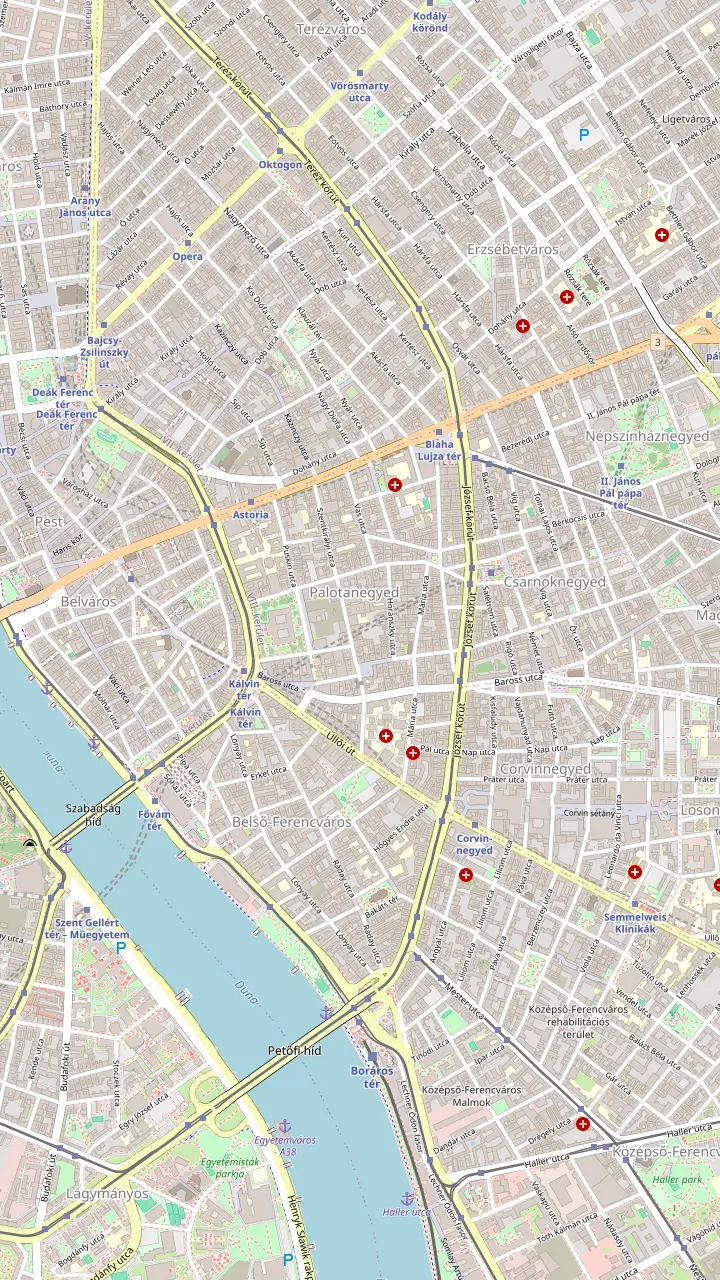
Browse 30 stops
Pick a route and tap a pin or a stop: you get its note and a Google Maps link.
Otto Wagner's synagogue, reopened in 2021 with a kosher café.
Google MapsConsecrated on 6 September 1859; closed every Saturday.
Google MapsThe steel weeping willow by Imre Varga, behind the Heroes' Temple.
Google MapsHolocaust Memorial Center on Páva Street, open Tuesday to Sunday.
Google Maps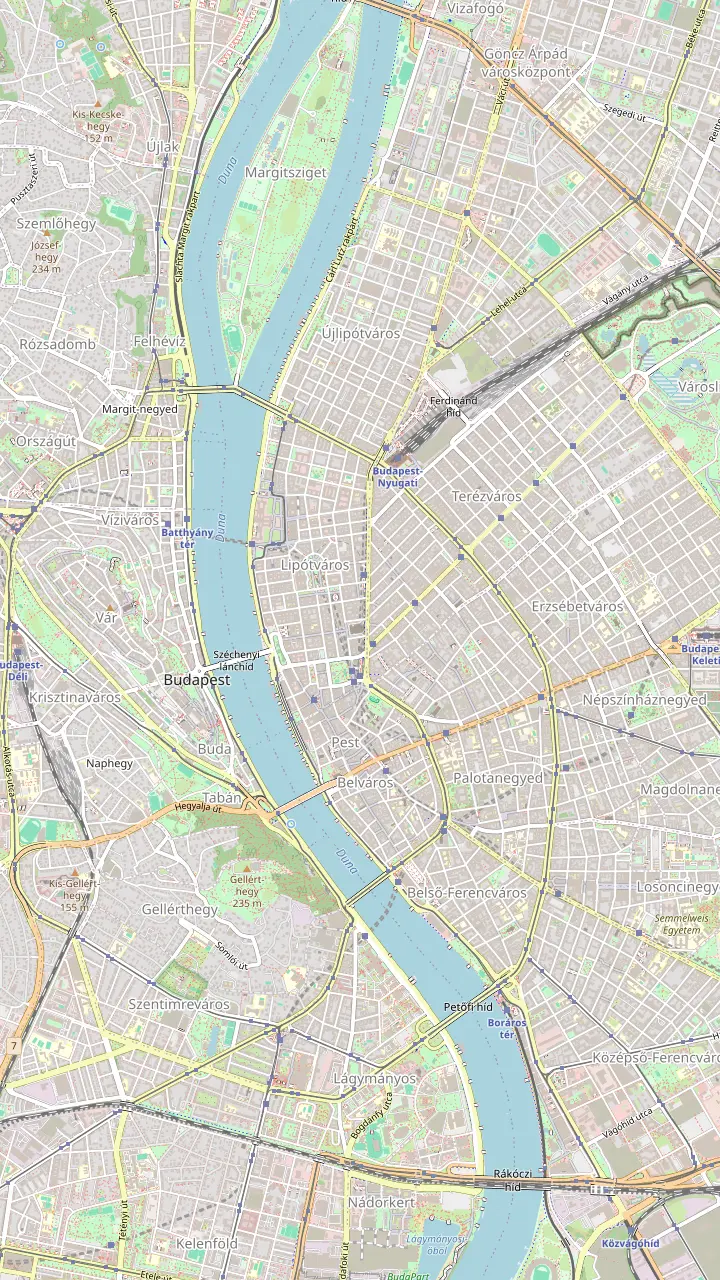
House of Terror at Andrássy út 60, closed on Mondays.
Google MapsUNESCO-listed square at the end of Andrássy út.
Google MapsWartime hospital and Cold War bunker, guided tours only, at Lovas út 4/c.
Google MapsFort on Gellért Hill; the Liberty Statue rises 40 metres with its pedestal.
Google MapsChurch in Gellért Hill whose entrance was walled up in the 1950s.
Google Maps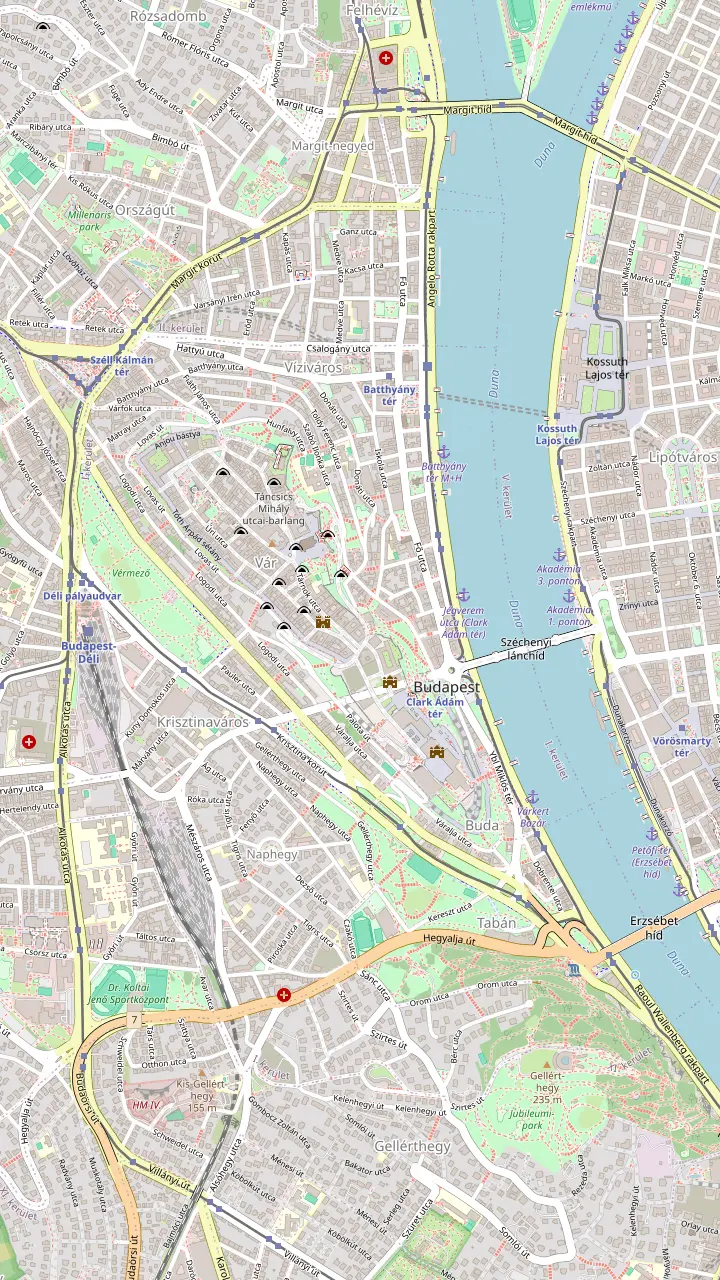
Meeting point for the long Buda Castle Cave tour, opposite Matthias Church.
Google MapsAdult church ticket 3,400 Ft; knees and shoulders covered.
Google MapsA 140 metre facade of terraces facing the Parliament.
Google MapsGate at the quiet northern end of the plateau, near the Medieval Jewish Prayer House.
Google MapsLone church tower at the north end of the hill; walk Táncsics Mihály utca to reach it.
Google MapsOfficial residence of the President of Hungary.
Google MapsRuns 08:00-22:00 between Clark Ádám tér and Szent György tér.
Google MapsAlajos Strobl's fountain of King Matthias, lit in colour after dark.
Google MapsThe largest public collection of Hungarian fine art, with a terrace over Pest.
Google MapsMiklós Ybl's riverside gardens, rebuilt between 2011 and 2014.
Google Maps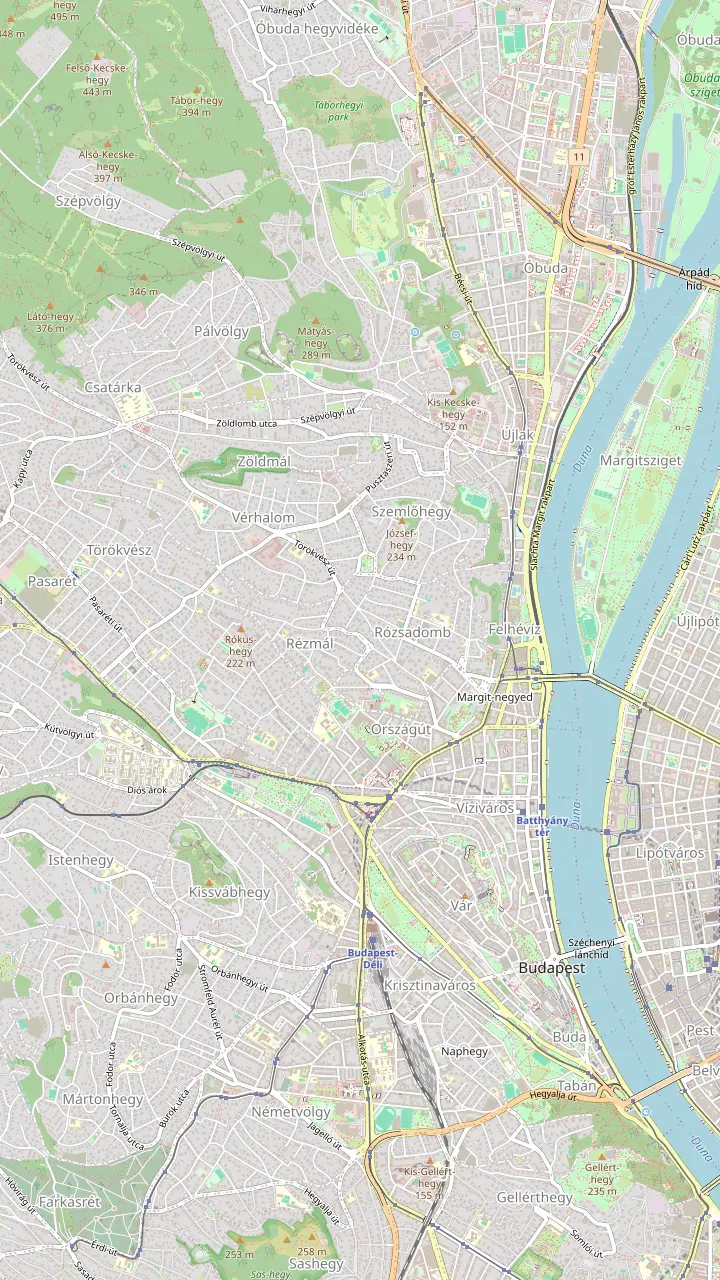
Short cave tour entrance at Dárda utca 2; tickets online only.
Google MapsWartime hospital and Cold War bunker, guided tours only, at Lovas út 4/c.
Google MapsSzemlő-hegyi, the step-free cave; closed on Tuesdays.
Google MapsPál-völgyi, the longest cave in Hungary; closed on Mondays.
Google Maps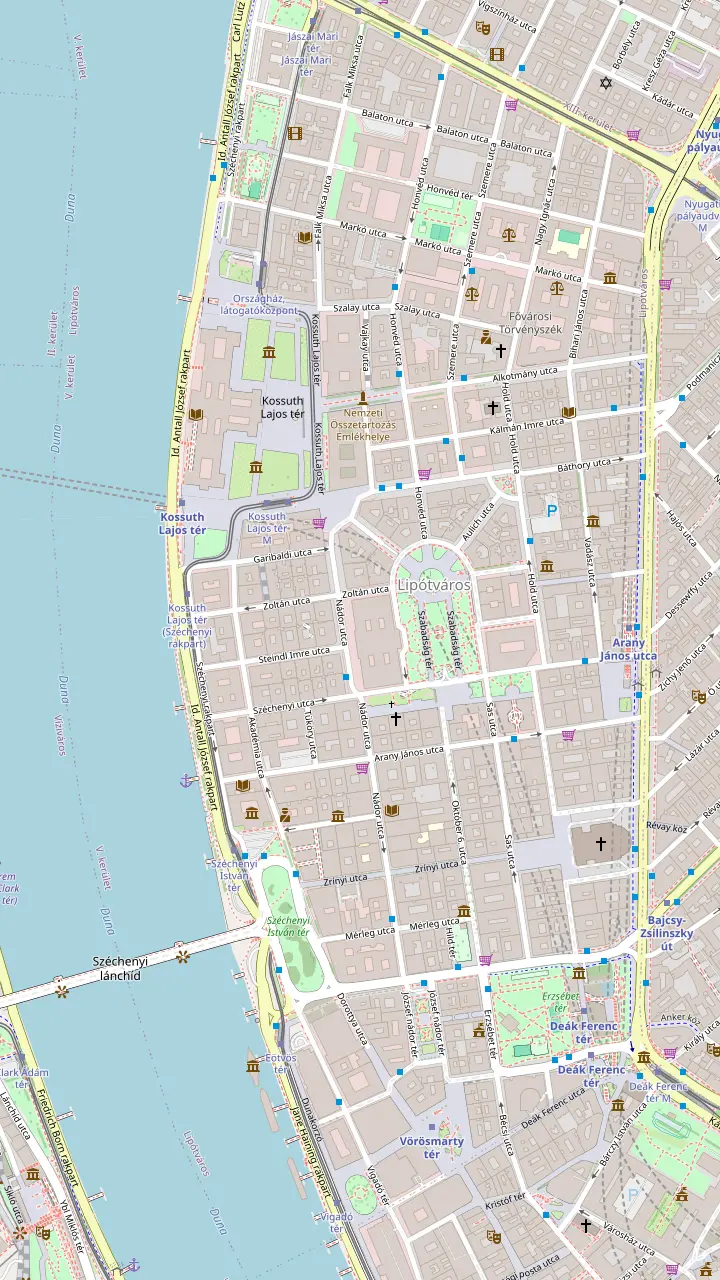
Budapest's largest church, 96 meters high; 364 steps or a lift to the dome.
Google MapsSquare in front of Parliament, framed by the old Ethnographic Museum and a ministry.
Google MapsHouse of Parliament, built 1885-1902; dome 96 metres.
Google MapsIron shoes remembering Jews shot into the Danube by the Arrow Cross.
Google MapsBuilt 1839-1849, blown up in 1945, reopened in 1949.
Google Maps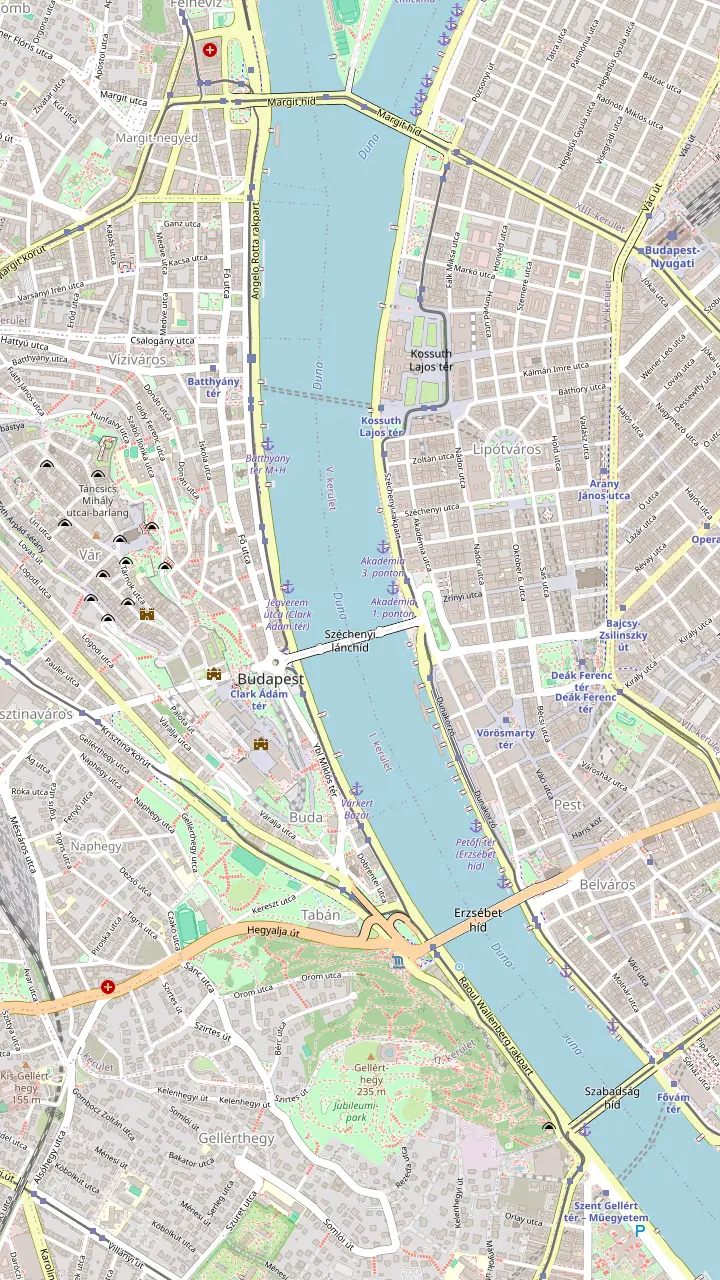
Starting square of the self-guided loop, in the heart of Pest.
Google MapsBudapest's largest church, 96 meters high; 364 steps or a lift to the dome.
Google MapsHouse of Parliament, built 1885-1902; dome 96 metres.
Google MapsIron shoes remembering Jews shot into the Danube by the Arrow Cross.
Google MapsBuilt 1839-1849, blown up in 1945, reopened in 1949.
Google MapsSquare at the foot of Castle Hill with the funicular's lower station.
Google MapsRuns 08:00-22:00 between Clark Ádám tér and Szent György tér.
Google MapsAdult church ticket 3,400 Ft; knees and shoulders covered.
Google MapsA 140 metre facade of terraces facing the Parliament.
Google MapsThe largest public collection of Hungarian fine art, with a terrace over Pest.
Google MapsMiklós Ybl's riverside gardens, rebuilt between 2011 and 2014.
Google MapsBridge back to Pest, seen in a row with the Chain and Liberty bridges from the quay.
Google MapsMaps © OpenStreetMap contributors
Everything for a Jewish tour in Budapest on foot: the great synagogues, their opening days and dress rules, the wartime ghetto, the memorials and the guided walks that open the doors.
Editorial team, budapestwalkingtour.click · Updated November 8, 2026 · Allow 8 min
Overview
Budapest's old Jewish Quarter lies in District VII on the Pest side, a grid of narrow streets just inside the Small Boulevard. The synagogue's own visitor service runs a 90-minute guided tour of the district's history, and its route gives you the backbone of any Budapest Jewish Quarter walking tour.1 It leaves the Dohány Street Synagogue for the Kazinczy Street Synagogue, then Gozsdu Courtyard and Madách Square, and returns via the Rumbach Street Synagogue.2
The neighbourhood grew outside the medieval walls of Pest, where Jewish merchants settled and laid out the winding lanes you walk today.10 The tourism agency notes that the world's oldest rabbinical school still housed where it was founded stands here, and that Orczy House, the first Jewish settlement in Pest, was pulled down in the 1930s.11,12 Look up at doorways and walls for symbols that guides love to decode.
Give the quarter several hours if you plan to step inside the synagogues rather than admire their facades. Start early at Dohány Street, where the queues build fastest, then walk the smaller streets toward Kazinczy and Rumbach. Kazinczy utca is also where you find meat and dairy kosher restaurants, so plan lunch there.13 The map above pins each stop, and the sections below explain what you see at every one.
Synagogues and memorials
| Stop | Built or opened | Designed by | Good to know |
|---|---|---|---|
| Dohány Street Synagogue | 1859 | Ludwig Förster | Closed Saturdays |
| Rumbach Street Synagogue | 1873 | Otto Wagner | Kosher café inside |
| Kazinczy Street Synagogue | Orthodox complex | Löffler brothers | Ritual bath on site |
| Páva Street synagogue | 1924 | Lipót Baumhorn | Holocaust Memorial Center |
| Holocaust Memorial Center | 2004 | Public institution | Closed Mondays |
Dates, architects and rules from the synagogues, the tourism agency and the Holocaust Memorial Center.14,20,3,15,30,31,32,33,18,34
The Dohány Street Synagogue was consecrated on 6 September 1859.14 Ludwig Förster, a professor at the Vienna Academy, designed the building, and Frigyes Feszl, architect of the Vigadó concert hall, designed the inner sanctum.20,21 VisitHungary calls it the largest Hebrew temple of Europe, and the scale is obvious the moment you step in under its twin onion-domed towers and see the galleries stacked above the long hall.22
The figures explain the space. The interior covers 1200 square metres and the towers rise 44 metres.23 There are 1497 seats for men on the ground floor and 1472 for women in the galleries, nearly 3000 in all.24 It is a Neolog synagogue, the reformed current that became the most widespread form of Judaism in Hungary, and it even has an organ.25 That organ, among the largest in the country, has nearly 4,500 pipes and has played since 1859.26
The complex reaches beyond the prayer hall. The Hungarian Jewish Museum sits in a wing added onto the synagogue in 1932.16 Next door, on the neighbouring corner plot, stood the house where Tivadar Herzl, who first imagined a Jewish state, was born in 1860.27 Because the acoustics are so good, the synagogue also hosts concerts, so look at the programme if your stay includes free evenings.28
Timing matters more here than at most sights. The whole Dohány complex closes every Saturday, and it also shuts for Jewish holidays.3,4 The synagogue's 2026 calendar closes it on September 11, 12, 13, 20, 21, 26 and 27.40 Entry stops one hour before closing time, so arriving late in the afternoon can mean being turned away.36 Look at the official calendar before you plan around a visit, because holiday closures also fall on Sundays and Fridays.
Hours change with the season, and the synagogue publishes them per year; the hours below are its 2026 schedule.35 In winter, from early November and in January and February, the synagogue opens Sunday to Thursday 10:00 am to 4:00 pm and closes at 2:00 pm on Fridays.35,41 In summer, from late May to the end of September, Sunday to Thursday runs until 8:00 pm.42 Spring and October hours run Sunday to Thursday until 6:00 pm.43 Friday closing is earlier than the rest of the week in winter, so treat a winter Friday as a morning visit and keep the afternoon for the streets outside.
Dress respectfully. Sleeveless tops, short skirts and shorts mean refused entry, though the ticket inspectors sell cover-ups.5,44 Men must cover their heads, and a kippah is handed out at the entrance after your ticket is checked.6 Expect a security check, so empty your pockets of metal and phones.45 Eating, drinking and smoking are banned inside the synagogue, the museum and the grounds.46
Plan your walk
Your day of the week and your interests decide the plan.
If It is a Saturday
Walk the streets, visit later
The Dohány complex is closed every Saturday.3
If It is a winter weekday
Go Sunday to Thursday, early
Winter hours end at 4:00 pm, and entry stops an hour earlier.35,36
If I want the inside of every synagogue
Take the official quarter tour
It includes entry to Dohány, Rumbach and Kazinczy.37
If I want the Holocaust history in depth
Add the Páva Street centre
Its permanent exhibition opened in 2006.38
If I want a guide's stories
Book the heritage walk
It runs 2 hours with the synagogue and museum inside.
Guided heritage walks
Interior visit
Synagogue and Jewish Museum
Longer visit
Museum, park and synagogues
Outdoor walk
Outside the synagogues
The synagogue's garden is where the Holocaust becomes impossible to ignore. During the Second World War Dohány Street formed the edge of the ghetto.90 High walls shut the ghetto off from the city in the autumn of 1944, and a rebuilt stretch of that wall now stands in the garden.91,8 Stand by it for a moment before moving on, and remember that the people inside had no way out until the city was liberated.
The garden was never meant to be a cemetery. Yet it is the burial place of nearly 2600 people who died in the Holocaust, laid to rest here when the ghetto was liberated, even though Jewish tradition forbids burial beside a synagogue.7 Flowerbeds shaped like graves carry family plaques. The synagogue's own rules ask visitors to behave accordingly, since the building and the cemetery are holy places.92
The Heroes' Temple, designed by László Vágó and built in the 1930s, remembers the Hungarian Jewish soldiers who died in the First World War.93 Your ticket also covers the museum, the ghetto exhibitions in the cellar, the memorial park, the Lapidarium and the graveyard, so give the complex a couple of unhurried hours.94 A free guided tour of the synagogue, park and graveyard runs in several languages, including English, German, French and Hebrew.95
Price a heritage walk
Set your group size and compare heritage walks.
4 options compared
Set your group size and compare heritage walks.
≈
View≈
View≈
View≈
ViewStarting prices as on the booking platform, converted at the ECB reference rate. You see the exact price at booking.
The quarter's story
1859
The great synagogue opens on 6 September.14
1873
Otto Wagner's synagogue is completed.15
1932
The Hungarian Jewish Museum gets its wing.16
1944
The Rumbach becomes part of the Pest ghetto.17
2004
The Holocaust Memorial Center opens on Páva Street.18
2021
The restored synagogue reopens.19
Behind the Heroes' Temple, in the memorial park named after Raoul Wallenberg, stands the Emmanuel Memorial Tree, a weeping willow in steel by sculptor Imre Varga.9 Each of its 30,000 leaves carries a name.96 Many families had no grave to visit, so they had the names of their relatives engraved on a leaf instead.97 The memorial was partly paid for by the actor Tony Curtis, whose family was Hungarian.98
The park's name honours the Swedish diplomat Raoul Wallenberg, who saved thousands of Hungarian Jews.39 He was not the only rescuer remembered in the quarter. The Grand option of the Viator heritage walk sold on this page also adds the memorial park dedicated to Carl Lutz, the Swiss diplomat, and the Kazinczy Street synagogue. Ask your guide to explain how protective papers worked.
A Jewish heritage tour in Budapest is at its most moving here, and it helps to go with someone who knows the stories behind the names. The walk booked from this page lasts 2 hours, starts in front of the Dohány Street Synagogue and includes an interior visit and the Jewish Museum. It is listed from €56. If you prefer a longer visit, another tour runs 2 to 4 hours with the Wallenberg park, the Rumbach and the Kazinczy synagogues.
Video
SLICE Full Doc on YouTube · Tap play to load the video; not before.
Raoul Wallenberg, the Swedish diplomat who saved thousands of Hungarian Jews
Before you go
By the late 19th century, the tourism agency explains, Pest's Jewish community had split into Neolog, status quo ante and Orthodox branches, each with its own synagogue.99 The Rumbach Street Synagogue, handed over in 1873, was designed by Otto Wagner, later famous in Vienna.15 Its wartime fate was grim: an internment camp in 1941 and part of the Pest ghetto in 1944.100,17 Religious life there ended by the end of the 1950s.101
After decades of decay the Rumbach reopened in 2021 after a full restoration.19 An exhibition there tells the story of Pest Jewry and of the 20,000 people deported to Kamenets-Podolsky.102 Its Torah ark can sink into a shaft so the hall can host concerts.103 Men cover their heads inside, and there is a kosher café.104,30 In winter it opens only on Sundays, 10:00-16:00, and in spring and summer Sunday to Thursday 10:00-18:00.89,105
The Kazinczy Street Synagogue was built for the Orthodox community to plans by the brothers Sándor and Béla Löffler.31 Its terraced front stands out from the row of houses, and its tracery windows were painted by Miksa Róth.106,107 The complex still serves daily life, with a kindergarten, a Talmudic school, a butcher's shop and a ritual bath.32 The official quarter walk takes you inside it along with the Rumbach and the Heroes' Temple.37
For the full history, continue south to Páva Street, where the Holocaust Memorial Center was placed outside the old Jewish Quarter by design.71 It opened on April 16, 2004, and its permanent exhibition has told the story of the Hungarian Holocaust since February 21, 2006.18,38 Its courtyard pillars are dedicated to 600,000 victims from Hungary and to 6 million across Europe.108 About 180,000 names are already engraved on its glass wall.109
The centre opens Tuesday to Sunday 10am-6pm, with the ticket office closing at 5pm.34 It does not recommend the permanent exhibition for children under 14.110 The memorial wall and the Tower of Lost Communities in the courtyard can be seen without a ticket.111 Its synagogue, designed by Lipót Baumhorn, was inaugurated on January 6, 1924, and glass chairs bearing names now fill its ground floor.33,112
Jewish Budapest is older than Pest's quarter. On Castle Hill, the Budapest History Museum runs the Medieval Jewish Prayer House at Táncsics Mihály utca 26.58 The tourism agency adds that a hidden residential area and several synagogues lie underground beneath Buda Castle.113 On the Pest riverbank, the Shoes on the Danube Bank memorial completes the picture, and our dedicated memorial guide covers how to find it.
FAQ
The synagogue checks visitors on entry; remove metal objects and phones from your pockets.45
It opens Tuesday to Sunday 10am-6pm, with the ticket office closing at 5pm.34
Sources
Walking Budapest soon? Ask a real person here.