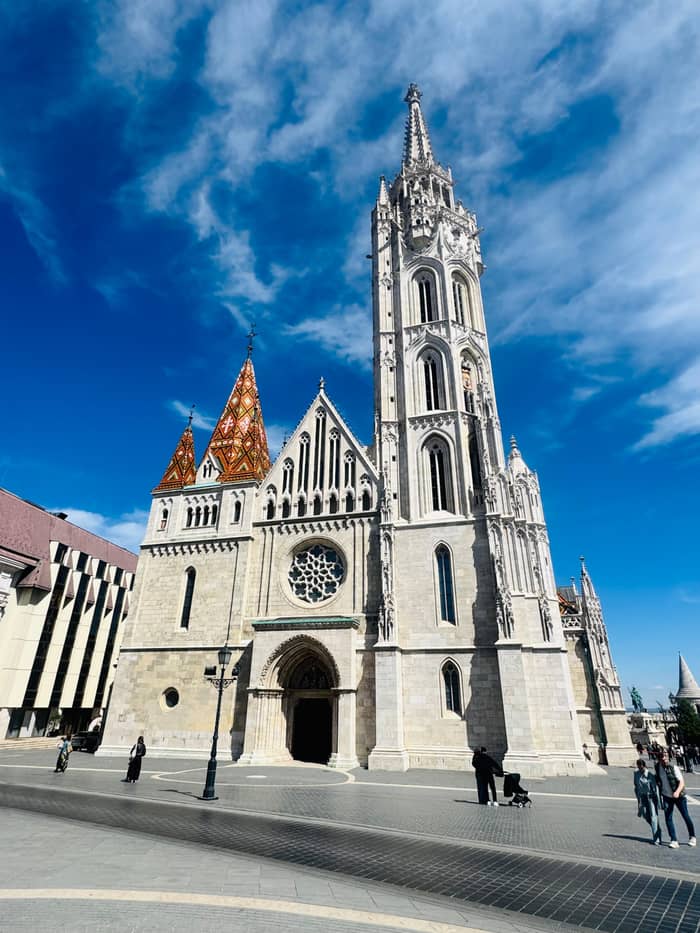
Small group
Communist history walk
Optional House of Terror
- Length2 hours
- GroupUp to 10
- GuideEnglish
Guides
Language
Currency
Check open spots€12 and up · free cancelPick out your stop
Budapest: Communist History Tour with House of Terror Option
★ 4.8 · 208 reviews so far
In brief
A communist walking tour in Budapest runs from the House of Terror on Andrássy út to Heroes' Square, then out to Memento Park for the toppled statues, with the Cold War bunkers under Buda as a second day.
Know before you go
Browse 30 stops
Pick a route and tap a pin or a stop: you get its note and a Google Maps link.
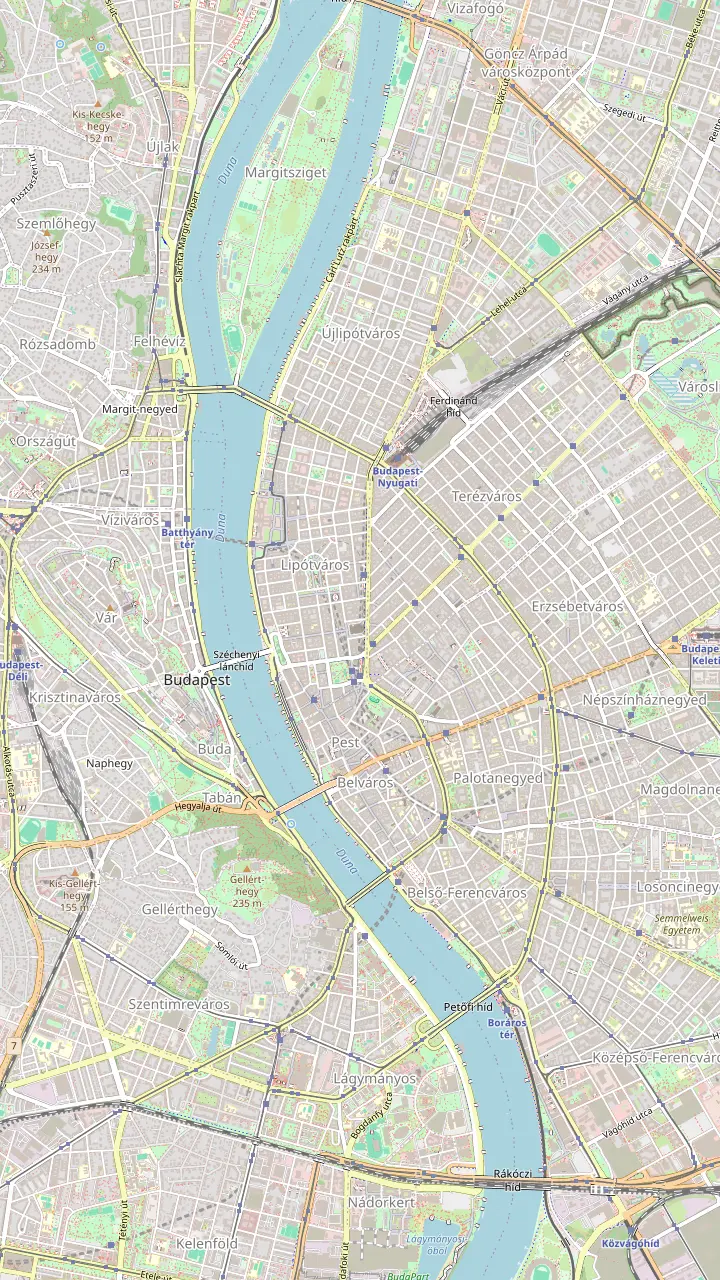
House of Terror at Andrássy út 60, closed on Mondays.
Google MapsUNESCO-listed square at the end of Andrássy út.
Google MapsWartime hospital and Cold War bunker, guided tours only, at Lovas út 4/c.
Google MapsFort on Gellért Hill; the Liberty Statue rises 40 metres with its pedestal.
Google MapsChurch in Gellért Hill whose entrance was walled up in the 1950s.
Google Maps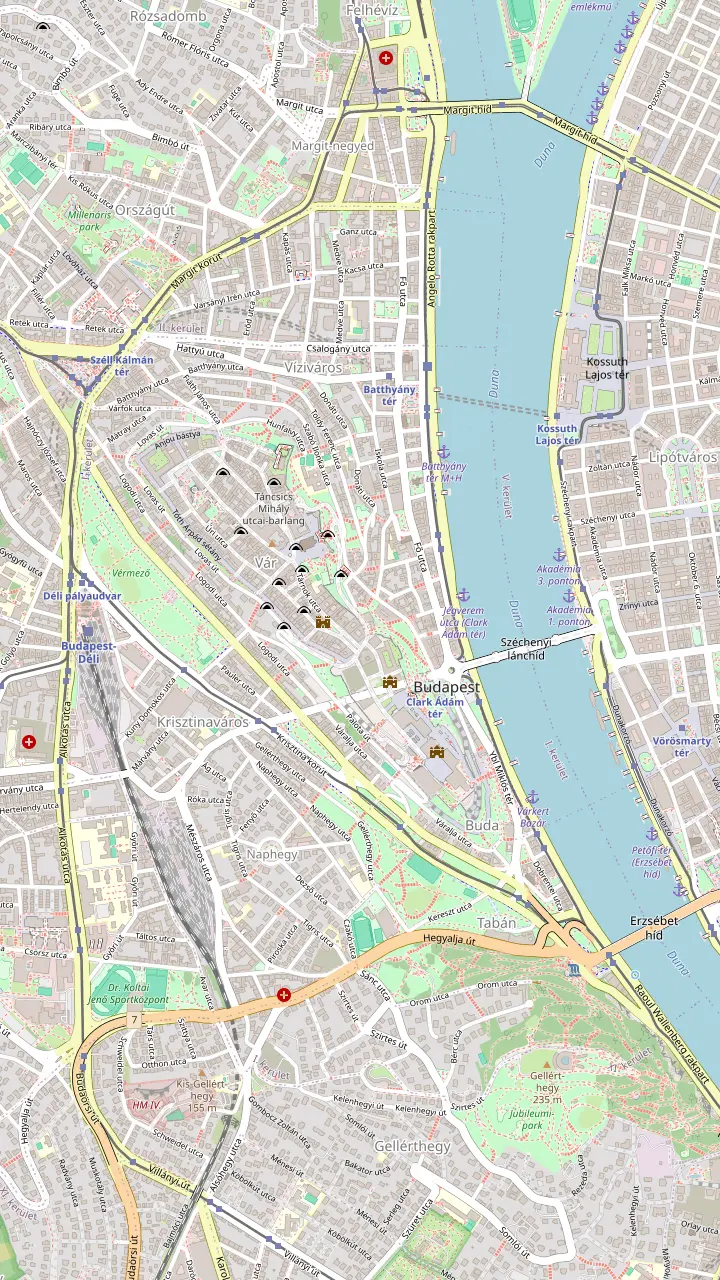
Meeting point for the long Buda Castle Cave tour, opposite Matthias Church.
Google MapsAdult church ticket 3,400 Ft; knees and shoulders covered.
Google MapsA 140 metre facade of terraces facing the Parliament.
Google MapsGate at the quiet northern end of the plateau, near the Medieval Jewish Prayer House.
Google MapsLone church tower at the north end of the hill; walk Táncsics Mihály utca to reach it.
Google MapsOfficial residence of the President of Hungary.
Google MapsRuns 08:00-22:00 between Clark Ádám tér and Szent György tér.
Google MapsAlajos Strobl's fountain of King Matthias, lit in colour after dark.
Google MapsThe largest public collection of Hungarian fine art, with a terrace over Pest.
Google MapsMiklós Ybl's riverside gardens, rebuilt between 2011 and 2014.
Google Maps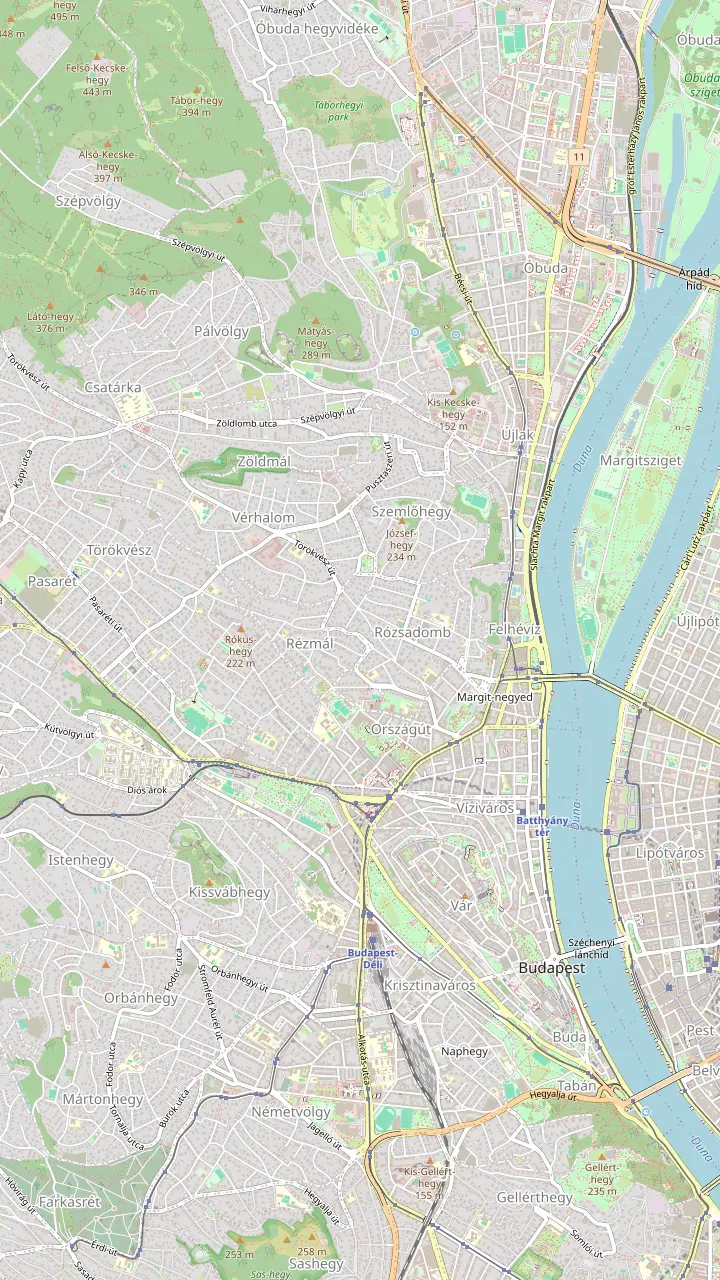
Short cave tour entrance at Dárda utca 2; tickets online only.
Google MapsWartime hospital and Cold War bunker, guided tours only, at Lovas út 4/c.
Google MapsSzemlő-hegyi, the step-free cave; closed on Tuesdays.
Google MapsPál-völgyi, the longest cave in Hungary; closed on Mondays.
Google Maps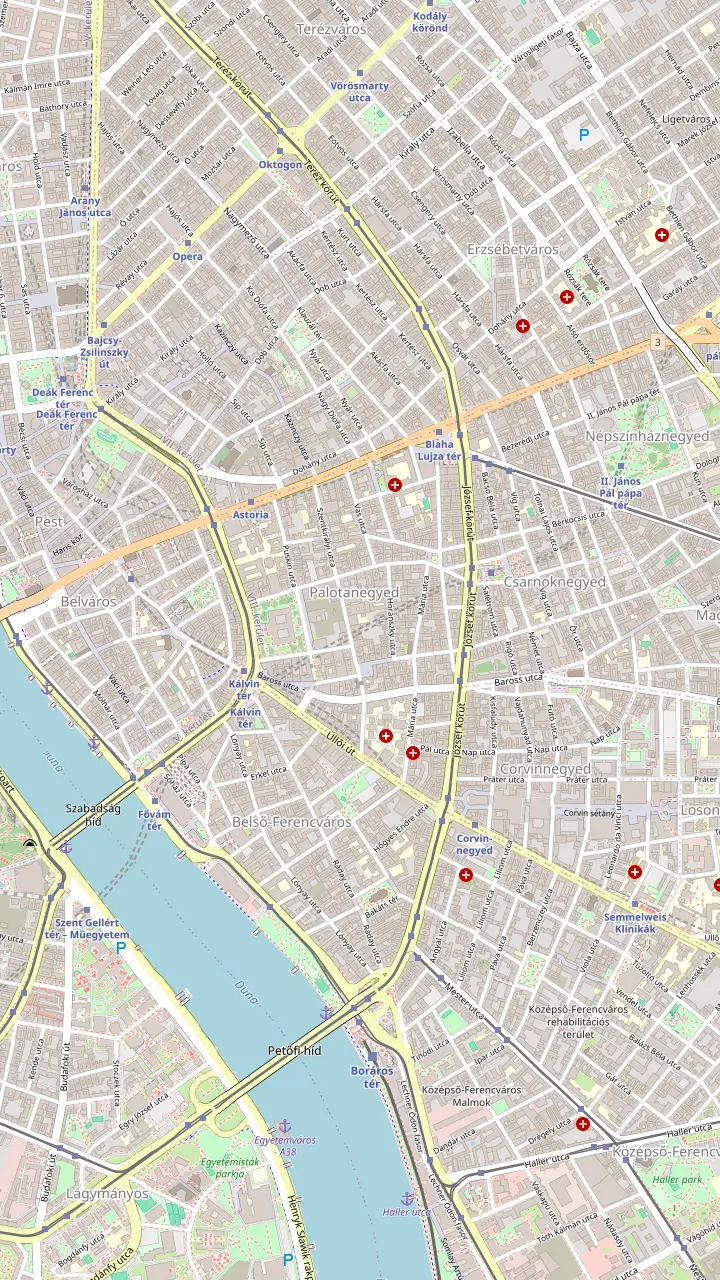
Otto Wagner's synagogue, reopened in 2021 with a kosher café.
Google MapsConsecrated on 6 September 1859; closed every Saturday.
Google MapsThe steel weeping willow by Imre Varga, behind the Heroes' Temple.
Google MapsHolocaust Memorial Center on Páva Street, open Tuesday to Sunday.
Google Maps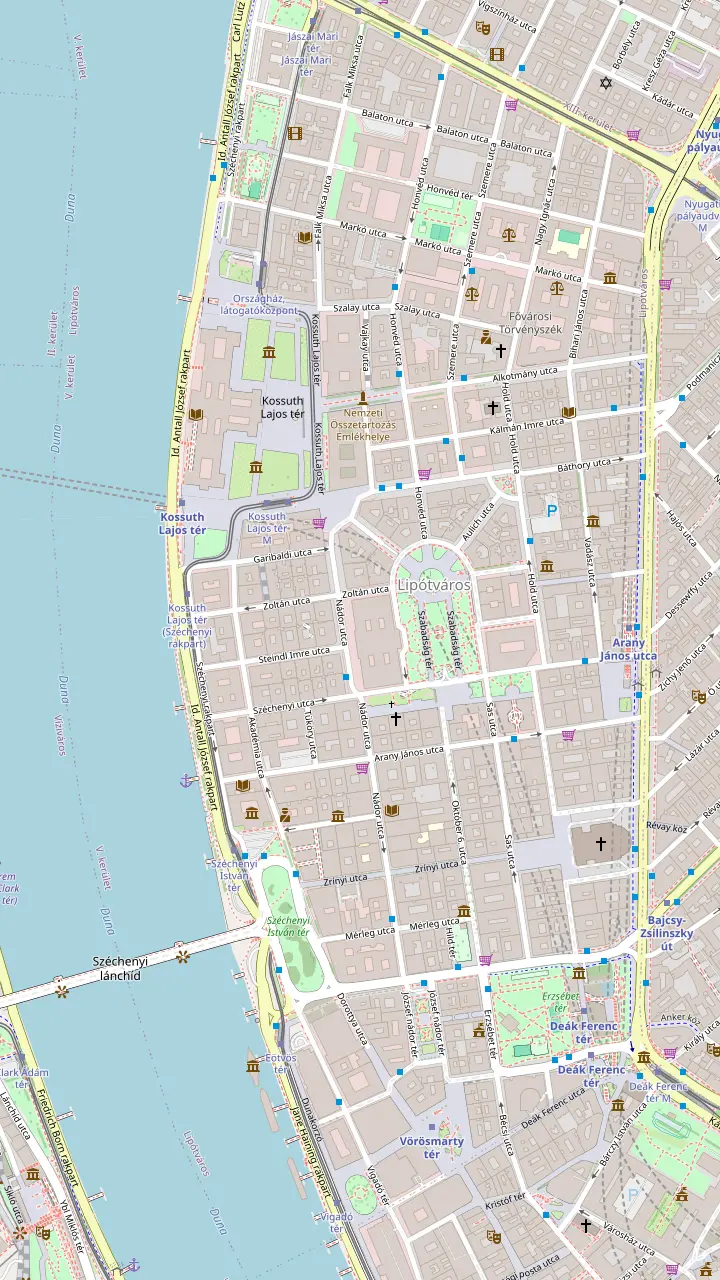
Budapest's largest church, 96 meters high; 364 steps or a lift to the dome.
Google MapsSquare in front of Parliament, framed by the old Ethnographic Museum and a ministry.
Google MapsHouse of Parliament, built 1885-1902; dome 96 metres.
Google MapsIron shoes remembering Jews shot into the Danube by the Arrow Cross.
Google MapsBuilt 1839-1849, blown up in 1945, reopened in 1949.
Google Maps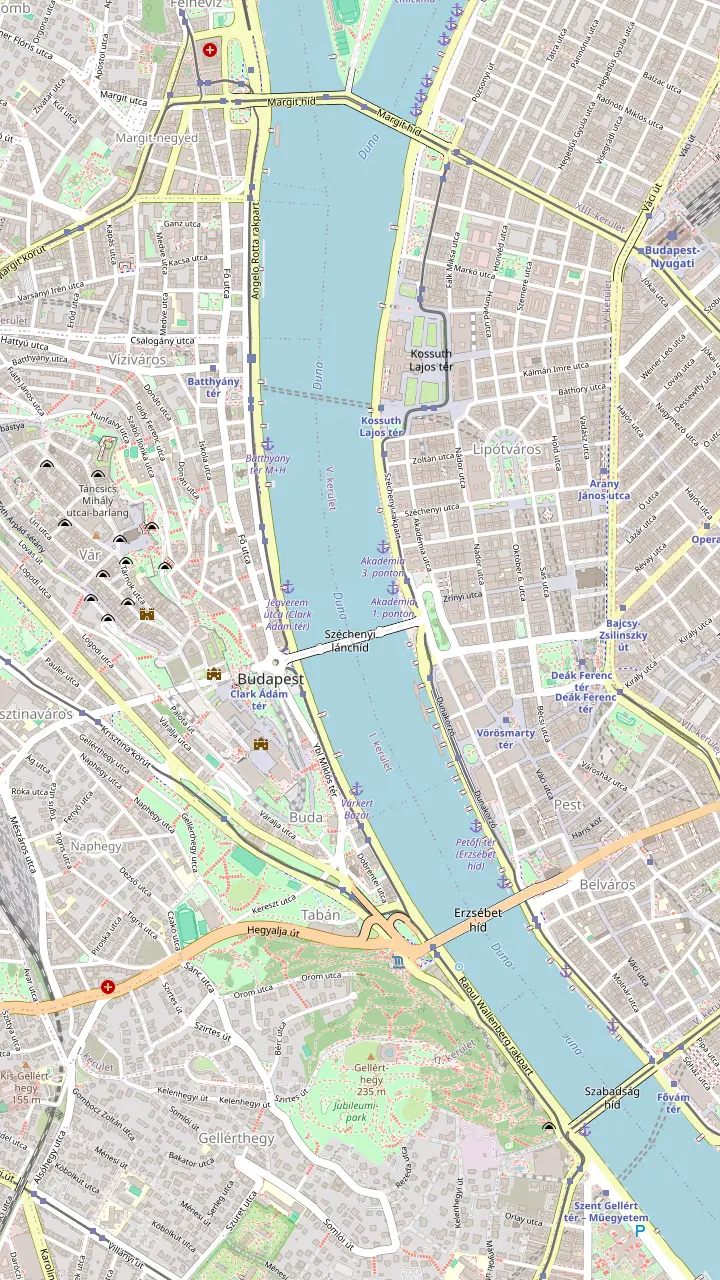
Starting square of the self-guided loop, in the heart of Pest.
Google MapsBudapest's largest church, 96 meters high; 364 steps or a lift to the dome.
Google MapsHouse of Parliament, built 1885-1902; dome 96 metres.
Google MapsIron shoes remembering Jews shot into the Danube by the Arrow Cross.
Google MapsBuilt 1839-1849, blown up in 1945, reopened in 1949.
Google MapsSquare at the foot of Castle Hill with the funicular's lower station.
Google MapsRuns 08:00-22:00 between Clark Ádám tér and Szent György tér.
Google MapsAdult church ticket 3,400 Ft; knees and shoulders covered.
Google MapsA 140 metre facade of terraces facing the Parliament.
Google MapsThe largest public collection of Hungarian fine art, with a terrace over Pest.
Google MapsMiklós Ybl's riverside gardens, rebuilt between 2011 and 2014.
Google MapsBridge back to Pest, seen in a row with the Chain and Liberty bridges from the quay.
Google MapsMaps © OpenStreetMap contributors
Build a communist walking tour in Budapest around the places that tell the story: the house of the secret police, the toppled statues, the 1956 uprising and the bunkers under Buda.
Editorial team, budapestwalkingtour.click · Updated November 8, 2026 · Allow 8 min
Overview
A communist walking tour in Budapest starts with a hard fact: the city lived through back-to-back dictatorships. Memento Park's history notes that Hungary ended the Second World War on the losing side in 1945, and that communist politicians, backed by the Soviet Red Army, then took power and built a Soviet-style state.7 That state lasted until the Eastern European dictatorships fell in 1989-90.8
Before the communists came the Arrow Cross, and both regimes even used the same building. The house at Andrássy út 60 was first the headquarters of the Arrow Cross terror and later of the communist political police.9 Today it is the House of Terror museum, and it is the natural first stop. From there, the story spreads across the city: to squares where statues once stood, to the hills of Buda and to tunnels cut into Castle Hill.
The regime left its mark in bronze as well as in fear. In the decades after the war, thousands of public statues celebrating the communist ideal went up across the country.10 After the regime change the question was what to do with them, and the answer now stands in a park on the southern edge of the city. The sections below follow the walk, from the museum to the statues and the shelters, with tickets, hours and tour options.
Where to go
| Site | Where | Open | Entry |
|---|---|---|---|
| House of Terror | Andrássy út 60 | Closed Mondays | 4000 HUF |
| Memento Park | District XXII | Daily | 3000 HUF |
| Hospital in the Rock | Lovas út 4/c | Daily, guided only | Ticket with tour |
| Cave Church | Gellért Hill | Monday to Saturday | Check at the church |
| Heroes' Square | End of Andrássy út | Always open | Free |
Addresses, hours and prices from the museums' own pages and the tourism agency.1,2,19,23,24,20,25,26,27,28,29
The House of Terror looks like its neighbours on Andrássy út until you see the black frame on its roof. Letters cut into that metal frame let sunlight write the word TERROR across the Neo-Renaissance front.14 The public foundation behind the museum bought the building in December 2000, and the museum opened on February 24th, 2002, at 5 pm.15,13 The black frame, the granite pavement and the stark facade set the house apart from its elegant neighbours on purpose.
Inside, the exhibition starts on the second floor with a room on the double occupation of Hungary, first by Nazi Germany and then by the Soviet Union.16 From there it moves through deportations, the persecution of farmers and churches, and the faces of the perpetrators. The tone is dark and deliberate, with sound and lighting chosen to unsettle, so give yourself time afterward to talk it over.
The basement is the part people remember. Rebuilt cells show the conditions political prisoners endured at Andrássy út 60 between 1944 and 1956.11 Until 1956 the house remained the hub of communist terror.17 After the revolution was crushed, the cells were stripped and the basement became a club for the Communist Youth Organisation, then a warehouse.18 Down there, the silence says more than any caption, and it is worth standing in a cell for a minute.
Monday is the museum's closing day; on the other days it is open 10.00 AM - 6.00 PM.2 Buy your ticket before the desk shuts at 5.30 PM.31 A full-price ticket is 4000 HUF and a reduced ticket 2000 HUF.19 There is no online booking: tickets are sold only at the museum.32 Allow a long visit if you like to read every panel. Groups of 10 to 30 can book an English-speaking guided tour for 20000 HUF per group.33
Getting there is simple. The museum is served by the Millennium underground, line M1, and by trams 4 and 6, a short walk from the Vörösmarty utca station or the Oktogon stop.34 The M1 itself is a sight: it opened in 1896 as the first metro line on the European continent.35 Ride it a few stops to feel how old the city's public transport is, then walk the rest of the avenue and look at how the buildings grow lower and greener toward the park.
Andrássy út was completed in 1896, and together with the Millennium Underground Railway and Heroes' Square it is a UNESCO World Heritage Site.36,37 Walk north from the museum to Heroes' Square, where the last five statues of the colonnades were replaced after the Second World War for political reasons.29 Ask yourself, as you look up, which faces were chosen and which were removed, and why a political system cared so much about statues of kings.
Plan your day
Pick by your time, your budget and your mood.
If I only have a morning
The House of Terror
It opens from 10.00 AM every day except Monday.2
If I want the toppled statues
Memento Park
If I have a Budapest Card
Use it at Memento Park
Entry to Memento Park is free with the card.6
If I want the Cold War bunker
The Hospital in the Rock
If I want a guide but a small budget
The free communist walk
A 2-hour English walk from Deák Ferenc tér.
Guided options
Small group
Optional House of Terror
Short city walk
Central Pest on foot
Transport included
Statues of communism
The revolution of 1956 is the emotional centre of any communist history walk.84 Its most famous image comes from Parade Square in central Budapest. On 23 October 1956, the crowd sawed the giant Stalin statue off at the knees and pulled it down, leaving only the boots on the pedestal.4 That tribune once stood on Felvonulási tér, Parade Square, where leaders took the salute on communist holidays.85
The revolution reached every corner of the city. The Hospital in the Rock, under Castle Hill, served again as an emergency hospital during 1956.84 The House of Terror on Andrássy út had been the centre of communist terror until that year.17 Memento Park's Witness Square recalls Széna Square in 1956 alongside other Eastern European squares where people rose against their rulers.86 Together these places map the uprising across both banks of the river.
Walking these sites in order helps the story make sense. Begin at the House of Terror to see what the secret police did, continue to Heroes' Square and City Park, and finish at Memento Park with the boots of the fallen dictator. Guides on themed walks connect the places with personal stories and family memories, which is where the history stops being abstract and starts to feel close.
Price a guided tour
Set your group size and compare the guided options.
4 options compared
Set your group size and compare the guided options.
≈
View≈
View≈
View≈
ViewStarting prices as on the booking platform, converted at the ECB reference rate. You see the exact price at booking.
Key dates
1944
Political prisoners are held at Andrássy út 60.11
1945
Communist politicians take power after the war.7
23 October 1956
The crowd topples the statue on Parade Square.4
1989-90
The Eastern European dictatorships fall.8
27 June 1993
The statues find a new home in District XXII.12
2002
The museum opens on 24 February.13
When communism fell, some people wanted the statues melted down. The Municipality of Budapest refused and ordered a theme park for them instead.30 Architect Ákos Eleőd designed it, and it opened on 27th June 1993, two years after the last Soviet soldier left Hungary.87,12 Today it displays 41 works from the communist era between 1945 and 1989.3 Any communist tour of Budapest that reaches it ends among giants.
The figures include Lenin, Marx, Engels, Dimitrov and Captain Ostapenko, alongside allegories of Hungarian-Soviet friendship.88 The Grandstand is a 1:1 copy of the tribune that once held the 8-meter bronze Stalin.89 An original Trabant waits at the entrance for photos.90 A film made in 2004 from secret police training reels plays in the Barrack Cinema.91 Give the film half an hour; it shows how secret police agents were trained.91
The park is in District XXII, at the corner of Balatoni út and Szabadkai utca, with free parking.23,92 It opens daily, 10 AM to 6 PM from May to October and 10 AM to 4 PM from November to April.24,81 Adults pay 3000 HUF, students 1800 HUF and children under 14 pay 1200 HUF.20,21,22 Entry is free with the Budapest Card, and cash is accepted in HUF and EUR.6,93 The grounds are not barrier-free, so wear sturdy shoes.82
Video
JCosta Motion on YouTube · Tap play to load the video; not before.
The Municipality of Budapest rejected this idea and, with consent, ordered the establishment of a theme statue park
Before you go
The Cold War pushed the city underground. The Hospital in the Rock was enlarged to withstand a chemical or nuclear attack and became the only nuclear-safe hospital in Budapest.5 From the early 1950s it was officially a secret site, a label removed only in 2002.94 Today it is a museum visited on guided tours of 60 minutes, with no photography allowed.95,83 Its rooms show how the city prepared for a war that never came.
Nearby, in the 1950s, workers turned some of the cellars below the Castle District into a covert shelter, with thick doors and air vents.96 Across the river, on Gellért Hill, the Cave Church tells another side of the story. In the 1950s the regime abolished all monastic orders, and the Pauline monks were forced out of their church in the rock.58 The community only returned decades later, and its story is told quietly at the entrance.
Their church entrance was sealed with concrete and the cross above it torn down.59 Only in the 1990s was the wall broken open, and a piece of it still stands to the right of the entrance as a reminder.97 The church, completed in 1931, can be visited Monday to Saturday when no Mass is being said.98,28 Standing by that fragment of concrete is a quiet, powerful end to the walk, with the river and the city spread out below you.
You can see a lot on your own, but a guide brings the period to life. Our featured tour is a small-group walk of 2 hours, capped at 10 people, and has options that add a House of Terror ticket or a Retro Center ticket. It is listed from €52. For a free communist walking tour in Budapest, a 2-hour English walk meets by the Ferris wheel near Deák Ferenc tér and is listed from €2. Such low-cost walks suit travellers who want a guide on a small budget.
Memento Park is far from the centre, so most people go with transport arranged. A 3-hour van tour from Batthyány Square takes up to 7 people and is listed from €62. If you prefer to make your own way, the park's official 2-hour guided tour with entry is listed from €25. Arrive at the cash desk 15 minutes early for it. Public transport also reaches the park, but it takes planning, so check the route before you set off and leave enough time to return before dark in winter.
A good day runs like this: the House of Terror in the morning, a walk up Andrássy út to Heroes' Square, lunch, then Memento Park in the afternoon before closing. Avoid Mondays, when the House of Terror is shut.2 Buda's bunkers make a second day, with the Hospital in the Rock and the Cave Church. Bring cash or a card, and a Budapest Card if you plan several museums.6 Pace yourself, because these are heavy subjects and the day is long.
FAQ
The crowd cut the statue down on 23 October 1956; the boots stayed on the pedestal.4
The park displays 41 pieces from the communist era between 1945 and 1989.3
Cameras, video and sound recording are all banned inside the bunker museum.83
Sources
Walking Budapest soon? Ask a real person here.